Have you ever wondered why some customers buy instantly while others take days or even weeks to make a decision? Understanding this behaviour is the key to mastering the buyer’s journey. Every customer goes through different stages before choosing a product or service, and using the right digital marketing strategy at the right moment can make all the difference.
In today’s competitive market, businesses must guide their audience from initial awareness to final purchase with clarity and value. When you align content, messaging, and marketing tactics with each stage of the buyer’s journey, you build trust, improve engagement, and significantly increase conversions.
This guide explains how digital marketing fits into every stage of the buyer’s journey so you can attract prospects, nurture them properly, and turn them into loyal customers.
What Is the Buyer’s Journey?
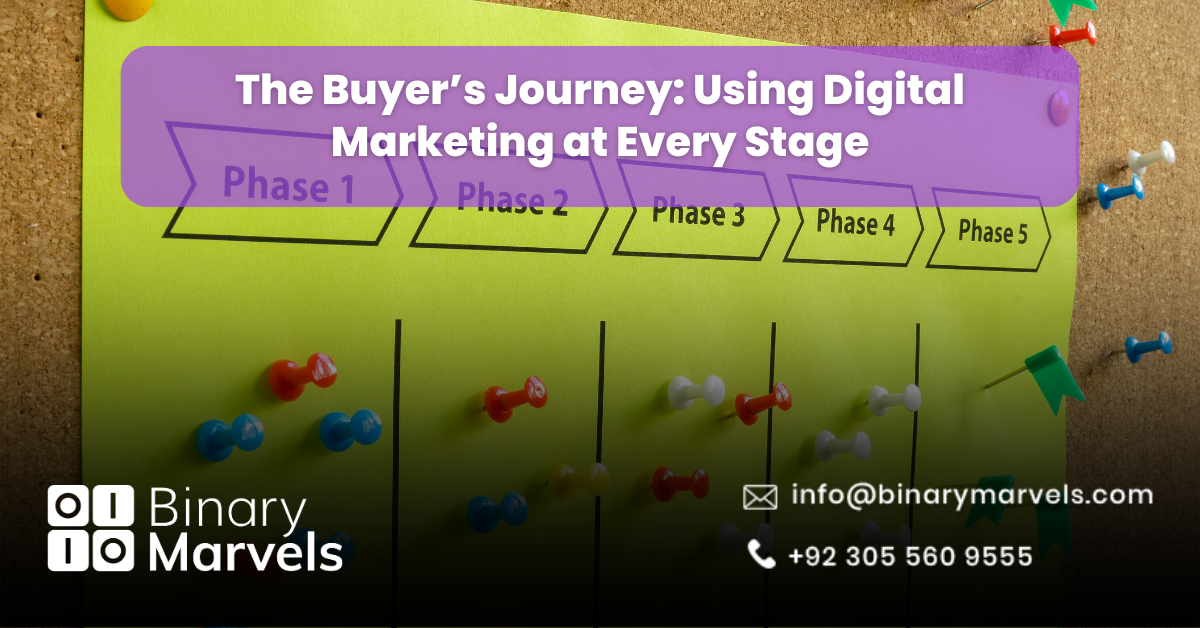
The buyer’s journey is the process customers follow from the moment they recognize a need to the point they make a purchasing decision. It helps you understand what your audience is thinking, what information they are searching for, and how you can guide them effectively.
This journey typically includes three main stages: Awareness, Consideration, and Decision. Each stage requires a different type of content and marketing approach. When your digital marketing strategy supports these stages, you naturally move prospects from curiosity to conversion.
Also Read: Common Digital Marketing Mistakes Businesses Make (How to Avoid Them)
Awareness Stage: Attracting the Right Audience
In the awareness stage, customers realize they have a problem but are not yet sure what the solution looks like. Their goal is to understand the issue and explore possible options, so they search for educational and informative content.
To reach customers at this stage, focus on creating value-driven content that addresses their questions. Blog posts, social media content, explainer videos, and SEO-focused articles help you increase visibility and build initial trust. This is also an ideal place to guide readers toward your digital marketing services so they can explore more helpful resources.
Consideration Stage: Building Trust and Offering Solutions
In the consideration stage, customers understand their problem and are actively looking for the best possible solutions. They compare brands, evaluate features, and look for guidance that helps them make an informed choice.
This is where your content should shift from general education to expert-level support. Provide detailed blogs, email nurturing sequences, case studies, comparison guides, and webinars that demonstrate your industry knowledge.
By offering valuable insights, you position your business as a trusted option. It’s also a great moment to guide visitors toward working with a reliable digital marketing agency for deeper support.
Decision Stage: Converting Prospects Into Customers
In the decision stage, customers are ready to choose a solution and just need reassurance that they’re making the right choice. They look for proof, trust signals, and clear reasons to select one brand over another.
Your focus here should be on delivering content that reinforces confidence. Use testimonials, reviews, detailed landing pages, comparison charts, and clear pricing information to remove any final doubts.
Strong calls-to-action, limited-time offers, and personalized recommendations help convert prospects into paying customers.
Also Read: The Future of Voice Search and Its Impact on Digital Marketing
Post-Purchase Stage: Turning Customers Into Loyal Advocates
After a customer makes a purchase, the journey doesn’t end. The post-purchase stage is your opportunity to strengthen relationships and turn satisfied customers into long-term supporters of your brand.
Provide helpful onboarding emails, follow-up messages, how-to guides, and customer support resources to ensure they get maximum value from their purchase. Encourage feedback, invite them to leave reviews, and offer loyalty rewards or exclusive content.
When customers feel appreciated and supported, they are far more likely to return and recommend your business to others.
How to Apply the Buyer’s Journey to Your Marketing Strategy?
To make the buyer’s journey work for your business, you need a clear plan that aligns your content and marketing efforts with each stage. Start by mapping out your audience’s pain points, questions, and motivations from awareness to decision. This helps you create targeted content that speaks directly to their needs.
Use analytics to identify which pages or campaigns attract visitors at each stage, and adjust your messaging accordingly. Personalization, automation, and retargeting can guide prospects smoothly through the funnel. When your strategy supports every step of the buyer’s journey, you build trust, improve engagement, and increase conversions.
Supercharge Your Business with Digital Marketing Today!
As a trusted Digital Marketing Agency in Rawalpindi, we deliver result-driven digital marketing services designed to boost your online presence, generate leads, and grow your business.
Don’t wait, connect with us now and take your brand to the next level!
Conclusion
Understanding the buyer’s journey allows you to connect with your audience at the right moment with the right message. When your digital marketing strategy supports each stage, you create a seamless experience that guides prospects from awareness to purchase with confidence.
By offering valuable content, building trust, and providing clear solutions, you can turn interested visitors into loyal customers. Use this framework to refine your marketing approach and strengthen the relationships that matter most to your business.